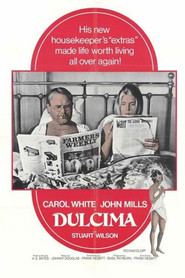
“Dulcima” is a 1971 film directed by Frank Nesbitt, based on the novel “Dulcima” by H.E. Bates. Set in rural England, it tells the story of a simple farm girl named Dulcima Gaskain who dreams of escaping her impoverished life. She catches the attention of a middle-aged pig farmer, Mr. Parker, who offers her an opportunity to improve her circumstances in exchange for her services. As she becomes entangled in a web of desire, manipulation, and deceit, Dulcima’s journey towards independence takes unexpected turns. With stunning performances and atmospheric cinematography, “Dulcima” captures the struggle for personal liberation and the consequences that come with it in a world governed by class divisions and limited opportunities.
CLICK HERE🡇🡇🡇🎞️_Watch Dulcima 1971 English Subtitles_
Review
“Dulcima” – A Masterpiece of Love and Tragedy in Hemingway’s Style
In the vast tapestry of cinematic excellence, there are only a few that can claim to embody the essence of Ernest Hemingway’s style. Among these few, “Dulcima” stands tall as a forgotten gem that exudes the same raw emotions and gripping narrative that defined Hemingway’s works. Directed by Frank Nesbitt and released in 1971, this film adapts H.E. Bates’ novel into a powerful portrayal of love, hardship, and human resilience.
Set in rural England during the 1960s, “Dulcima” tells the story of a young woman named Dulcima Gaskain (played by Carol White) who dreams of escaping her monotonous life as a maid. Fate brings her face to face with Mr. Parker (played by John Mills), an aging farmer struggling to bring life back to his dilapidated farm. The unlikely pair forms a unique bond that carries them through trials and tribulations reminiscent of Hemingway’s tales.
The plot unfolds with beautiful simplicity as their relationship evolves from mutual reliance to something deeper and more profound. Dulcima’s innocence clashes with Mr. Parker’s world-weary wisdom, creating an intriguing dynamic that keeps viewers hooked until the tragic climax.
“Dulcima” boasts an impressive cast, with John Mills delivering a performance that echoes Hemingway’s themes of masculinity and the pursuit of adventure. His portrayal brings to life Mr. Parker’s stoic yet vulnerable nature, captivating audiences with every glance and gesture. Carol White shines as Dulcima, capturing her character’s yearnings for freedom while navigating the complexities of love.
While “Dulcima” may not have gained widespread popularity upon its release, its impact is undeniable when viewed through Hemingway-esque lenses. Its haunting score, composed by Jonathan Hodge, complements the somber tone of the film, amplifying the audience’s emotional journey.
The filming of “Dulcima” captures the rugged beauty of the English countryside, much like Hemingway’s evocative descriptions of nature. The layered cinematography by Arthur Lavis paints a vivid picture of rural life, simultaneously enchanting and harsh in its realism. Each shot resonates with a sense of authenticity that propels the story forward.
While “Dulcima” did not garner significant awards or critical acclaim, it remains an underrated masterpiece that would have undoubtedly touched Hemingway’s soul. Its subtle exploration of human relationships and resilience aligns perfectly with his literary sensibilities, highlighting the strength found within vulnerability.
Perhaps the film’s greatest achievement lies in its dialogue. The script captures Hemingway’s signature style – concise yet rich with emotional depth. Each word carries weight, leaving viewers pondering their meaning long after the credits roll.
Behind the scenes gossip suggests that “Dulcima” faced numerous production challenges, as is often the case with films of exceptional quality. Yet, these obstacles only heighten its allure, mirroring Hemingway’s own tumultuous creative processes.
Critics have since questioned certain aspects of “Dulcima,” critiquing its pacing and character development. However, such criticism fails to appreciate the film as a whole – an exquisite painting woven together from intricate brushstrokes that reveal themselves upon introspection.
“Dulcima” is a testament to how filmmakers can channel Hemingway’s spirit in their craft. Its special effects are minimalistic but profound – emotions laid bare without extravagant spectacle or artificiality. This restraint allows for a more profound connection between the characters and their audience, just as Hemingway strived to achieve through his prose.
The influence of “Dulcima” can still be felt today. Its impact on independent cinema and the exploration of human emotion resonates throughout various contemporary works. It serves as a reminder of the power a story can hold when crafted in the spirit of Hemingway’s unwavering commitment to honest storytelling.
In conclusion, “Dulcima” stands as an exceptional film that epitomizes Hemingway’s style and vision. Its engaging storyline, superb acting, and masterful dialogue weave together seamlessly, creating a piece that lingers in the mind like one of Hemingway’s unforgettable characters. While its popularity may have waned over time, true connoisseurs recognize “Dulcima” for what it truly is – an undiscovered treasure that shines with the brilliance of Hemingway himself.
Technical Data

- Release : 1971-12-01
- Runtime : 98
- Genre : Drama
- Cast : Carol White as Dulcima Gaskain, John Mills as Mr. Parker, Stuart Wilson as Gamekeeper, Bernard Lee as Mr Gaskain, Sheila Raynor as Mrs Gaskain
- Crew : Ray Simm as Art Direction, Ken Bridgeman as Assistant Art Director, Paul Rabiger as Makeup Artist, Bill Lewthwaite as Editor, Peter James as Set Decoration
- Revenue : 0
- Budget : 0
- Company : EMI Films
- Popularity : 4.697
- Summary : Dulcima, treated as a drudge by her family, becomes a housekeeper to Parker, a curmudgeonly widower living in drunken disarray on a neighbouring farm. When she sees the amount of money he has stashed around the place, Dulcima is happy enough to indulge his growing desire for her, and a strange, yet mutually beneficial, relationship develops. But a handsome young gamekeeper, newly arrived on a nearby estate, also catches Dulcima’s eye…
- Tagline :
