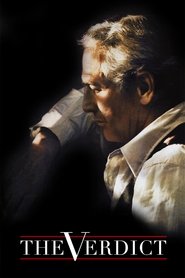
“The Verdict” (1982) is a legal drama that delves into the depths of moral ambiguity within the justice system. Paul Newman delivers a captivating performance as an alcoholic lawyer, Frank Galvin, seeking redemption by taking on a seemingly unwinnable medical malpractice case. The film spotlights the struggle between truth and manipulation, exposing the corrupt nature of those involved in the pursuit of power and money. With razor-sharp dialogue and intense courtroom scenes, “The Verdict” explores the fragility of justice and the resilience of one man determined to fight for what is right.
CLICK HERE🡇🡇🡇🎬_Watch The Verdict 1982 English Subtitles_
Review
The Verdict: A Masterpiece of Legal Intrigue Unveiled
Lo, dear readers, lendeth me thy ears as I proclaim the tale of “The Verdict,” a motion picture that hath taken the world by tempest. This dramatic opus doth spin a yarn intricate in its essence, conjured from the mind of David Mamet and brought to life with all the flair and fervor befitting a Shakespearean play.
The tale unfoldeth thusly: Frank Galvin, a weary and weathered lawyer portrayed by the illustrious Paul Newman, findeth himself caught betwixt the web of an arduous case. Facing Goliath-like odds, Galvin embarketh upon a valiant journey in pursuit of justice, wherein his mettle shall be tested and his soul tried.
News arriveth that our protagonist hath been approached to represent one Deborah Ann Kaye in a matter most grave. She alleges that negligence hath led to her falling into a perpetual state of coma whilst under the care of two medical practitioners, no less. With steadfast determination coursing through his veins, Galvin taketh upon himself this Herculean task.
Thenceforth doth we witness an enthralling plot weaving its tendrils through the halls of justice. The unscrupulous attorney representing the defendants is none other than Ed Concannon (James Mason), whose cunning knoweth no bounds. An adversary formidable indeed.
What follows is an enigmatic dance betwixt these warring factions; their every word calculated and their every move fraught with gravity. Each character, from shining star to supporting player, bringeth forth performances so captivating that even Shakespeare himself might relish in their artistry.
The history behind “The Verdict” informeth us that it was born from the quill of David Mamet, whose wordsmithery doth possess an uncanny ability to ensnare the hearts and minds of those who dare to traverse his works. The screenplay, peppered with dialogue of the highest order, giveth life to characters that leap from the page like Puck bounding through an Athenian forest.
Methinks one cannot discuss this marvel without paying homage to its scintillating score and popularity. Composed by none other than Johnny Mandel, the music sets the mood with a flair befitting a Midsummer Night’s Dream. Critics and audiences alike hath declared their love for this enchanting melody, for it doth elevate the verisimilitude of each scene.
The filming of “The Verdict” was no less than a grand spectacle. Captured through the lens of Andrzej Bartkowiak, every frame seemeth imbued with a painterly quality reminiscent of Titian or Vermeer. Scenes of raucous courtrooms and intimate chambers doth transport us into a world where justice teetereth on a precipice.
Evaluation of this opus hath been nothing short of effusive praise. Critics showered accolades upon Newman’s performance, noting how he breathed life into Galvin with an intensity that doth rival Macbeth himself. The Academy Awards also recognized its brilliance, granting three nominations to support this testament to excellence.
Furthermore, cinematography in “The Verdict” deserveth utmost commendation. Bartkowiak’s vision brought forth visuals that hath left an indelible mark on cinematic history. Every frame bathed in shades both dark and light; like shadows intermingling upon yonder stage.
Yet art is not without its critics, and “The Verdict” did not escape their gaze unscathed. Some deem’d it too melodramatic, akin to Ophelia’s tragic descent into madness. Nevertheless, ’tis but a passing whisper amidst thunderous applause.
Production and editing too played their parts in this grand tapestry. Sidney Lumet, the director behind this magnum opus, hath spun a tale that tugs at our heartstrings whilst keeping us on the edge of our seats. Such is the magic of his direction that even the Bard himself would marvel at its intricacy.
In conclusion, dear readers, “The Verdict” stands as an unprecedented achievement in the annals of cinema. With its deftly woven plot, sublime performances, and an artistry unmatched by any other, it hath secured its place amongst the pantheon of great works. As William Shakespeare himself might declare, let thy collective gaze be directed towards “The Verdict,” a masterpiece for the ages.
Technical Data

- Release : 1982-12-08
- Runtime : 129
- Genre : Drama
- Cast : Paul Newman as Frank Galvin, Charlotte Rampling as Laura Fischer, Jack Warden as Mickey Morrissey, James Mason as Ed Concannon, Milo O’Shea as Judge Hoyle
- Crew : Peter C. Frank as Editor, David Mamet as Screenplay, Richard D. Zanuck as Producer, Burtt Harris as Executive Producer, Sidney Lumet as Director
- Revenue : $53,977,250
- Budget : $16,000,000
- Company : 20th Century Fox
- Popularity : 13.253
- Summary : Frank Galvin is a down-on-his-luck lawyer and reduced to drinking and ambulance chasing, when a former associate reminds him of his obligations in a medical malpractice suit by serving it to Galvin on a silver platter—all parties are willing to settle out of court. Blundering his way through the preliminaries, Galvin suddenly realizes that the case should actually go to court—to punish the guilty, to get a decent settlement for his clients… and to restore his standing as a lawyer.
- Tagline : The doctors want to settle, the Church wants to settle, their lawyers want to settle, and even his own clients are desperate to settle. But Galvin is determined to defy them all. He will try the case.
