“12 Angry Men 1957” is a scorching courtroom drama where twelve men clash and sweat in a stuffy room like overheated pressure cookers. Set entirely within the confines of a jury deliberation room, the film unfolds with relentless intensity as these strangers, representing diverse backgrounds and perspectives, dissect the evidence presented in a murder trial. Tension escalates as egos collide and verbal jabs fly, revealing layers of prejudice, bias, and personal demons. Like raging bulls in a ring, they engage in ferocious battles of persuasion and conviction to determine the fate of a young man’s life. Through blistering dialogue and powerhouse performances, this riveting masterpiece examines the fragility of justice and our capacity for compassion and reason amidst overwhelming odds.
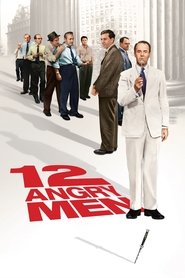
CLICK HERE⭣⭣⭣🎫_Watch 12 Angry Men 1957 English Subtitles_
Review
The Persuasive Power of “12 Angry Men”: Unveiling the Mastery of Human Influence
Introduction:
In the realm of cinematic brilliance, one movie stands apart as a testament to the power of persuasion and human psychology – “12 Angry Men.” Directed by Sidney Lumet, this 1957 masterpiece delves into the depths of human nature, unraveling a tense courtroom drama that captivates audiences, transcending time and leaving an indelible mark on the world of cinema.
Plot:
With a minimalist setting primarily situated in a jury deliberation room, “12 Angry Men” tells the gripping story of 12 jurors who must unanimously decide the fate of an accused young man. As they gather to cast their votes, it quickly becomes apparent that not all members are convinced by the seemingly concrete evidence presented during the trial. What ensues is not only a battle for justice but also an exploration of prejudice, biases, and personal growth.
Characters:
The diverse cast’s nuanced performances bring this narrative to life. From Henry Fonda’s powerful portrayal as Juror #8 to Lee J. Cobb’s captivating turn as Juror #3, each character embodies distinct personality traits that invite viewers to empathize with their struggles and motivations. Their interactions exhibit Robert Cialdini’s principles of influence—commitment and consistency, social proof, liking—prompting viewers to question their own beliefs and perspectives.
Dialogue:
The film’s dialogue is a masterclass in persuasive discourse. Through skilled writing by Reginald Rose, each line carefully constructs arguments while subtly manipulating emotions. The script demonstrates Cialdini’s concepts such as authority and scarcity when characters present evidence or challenge one another’s assumptions about truth and justice.
Cinematography:
Sidney Lumet’s directorial prowess shines through his expert use of camera angles and lighting. By closely framing characters with dim backgrounds or utilizing high-angle shots when tension builds, Lumet amplifies the emotional impact of pivotal moments. This deliberate choice accentuates the persuasive influence held by each character, emphasizing their power to sway opinions.
Score and Popularity:
Composed by Kenyon Hopkins, the film’s score bolsters tension and emphasizes critical plot points with its suspenseful orchestration. The soundtrack further immerses viewers into the jury room, heightening the experience of persuasion as it unfolds step by painstaking step. It comes as no surprise that “12 Angry Men” rapidly gained immense popularity worldwide upon its release, eventually solidifying its status as a timeless classic.
Filming:
Shot on a shoestring budget within just 21 days, “12 Angry Men” showcases Lumet’s directorial resourcefulness. The limited physical space mirrors the trapped environment that amplifies the characters’ emotional struggles. Lumet employs closed shots and tight framing to focus on the nuances of facial expressions and body language—an artistic touch that underlines persuasion’s minute yet significant details.
Analysis:
Delving deeper into Cialdini’s principles, “12 Angry Men” exemplifies reciprocity when Juror #8 lends an attentive ear to others’ arguments. It also reveals consistency as jurors alter their perspectives under newfound evidence or peer pressure—further highlighting our human desire for alignment in beliefs and actions.
Awards:
The film’s brilliance garnered critical acclaim during its time, receiving three Academy Award nominations. Though it missed out on wins, it secured a permanent place among cinema enthusiasts who recognized its unmatched storytelling finesse and exploration of human nature.
Criticism:
As with any cinematic masterpiece, “12 Angry Men” has faced some criticism over the years. Some argue that certain characters lack depth or believability in their transformation throughout the film. Nonetheless, many vehemently disagree, honoring Lumet’s direction for showcasing growth subtly yet effectively—truly a testament to his understanding of human behavior.
Conclusion:
“12 Angry Men” remains as relevant today as it was over six decades ago. Its exploration of persuasion, human psychology, and justice continues to captivate audiences worldwide. Through Lumet’s brilliant direction, Cialdini’s principles come alive on the silver screen, making this film a timeless reminder of the influence we all hold over each other—an enduring legacy that will continue to shape the way we perceive and interact with one another.
Technical Data

- Release : 1957-04-10
- Runtime : 97
- Genre : Drama
- Cast : Martin Balsam as Juror 1, John Fiedler as Juror 2, Lee J. Cobb as Juror 3, E.G. Marshall as Juror 4, Jack Klugman as Juror 5
- Crew : Henry Fonda as Producer, Sidney Lumet as Director, Reginald Rose as Screenplay, Reginald Rose as Producer, Reginald Rose as Story
- Revenue : $1,000,000
- Budget : $350,000
- Company : United Artists, Orion-Nova Productions
- Popularity : 51.011
- Summary : The defense and the prosecution have rested and the jury is filing into the jury room to decide if a young Spanish-American is guilty or innocent of murdering his father. What begins as an open and shut case soon becomes a mini-drama of each of the jurors’ prejudices and preconceptions about the trial, the accused, and each other.
- Tagline : Life is in their hands. Death is on their minds.
