“Mo’ Money” is a 1992 comedy film starring Damon Wayans and Marlon Wayans. Johnny Stewart, a smooth-talking scam artist with the gift of gab, is hired as a janitor in a credit card company. With his newfound access to money and the good life, trouble ensues. As he becomes entangled in a web of deception and crime, he must outsmart not only the law but also his own desires for wealth. A rollercoaster ride of wit, charm, and misadventure, “Mo’ Money” explores the consequences of greed and the power of love amidst a backdrop of hilarious chaos.
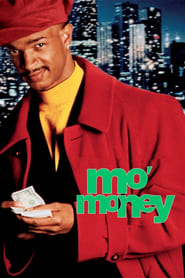
CLICK HERE⭣⭣⭣🎦_Watch Mo’ Money 1992 English Subtitles_
Review
In the vast realm of cinema, there are movies that achieve monumental success and go down in history as timeless classics. There are those that capture the collective imagination, leaving an indelible mark on our cultural fabric. And then there are movies like “Mo’ Money” – a film that may not have garnered the same level of critical acclaim or box office triumph, but nevertheless holds a special place in the hearts of its devoted fans.
Released in 1992, “Mo’ Money” was directed by Peter MacDonald and written by Damon Wayans, who also stars in the film alongside his brother Marlon Wayans. The storyline revolves around two brothers, Johnny and Seymour Stewart (played by Damon and Marlon respectively), who embark on a series of misadventures involving love, money, and mistaken identities.
The plot unfolds as Johnny works as a mailroom clerk at a credit card company while secretly using his unique set of skills to defraud unsuspecting customers. His life takes an unexpected turn when he falls in love with Amber Evans (played by Stacey Dash), a beautiful woman who turns out to be the daughter of his boss. As they navigate their blossoming romance amidst complications and secrets, chaos ensues.
One cannot discuss “Mo’ Money” without mentioning the impeccable comedic performances delivered by Damon Wayans and Marlon Wayans. Their chemistry on screen is palpable, with their genuine brotherly bond shining through their characters’ interactions. Damon showcases his prowess as both an actor and writer, injecting the script with witty dialogue and hilarious one-liners that leave audiences roaring with laughter.
The supporting cast also deserves recognition for their stellar contributions to the film. Stacey Dash delivers a memorable performance as Amber – her beauty and charm adding depth to her character’s complexities. Joe Santos portrays Frank Ryder, Johnny’s boss who becomes entangled in a web of deceit. His portrayal is both charismatic and cunning, capturing the audience’s attention with his every move.
While “Mo’ Money” may not have achieved box office dominance, it remains a significant part of cinema history. Its rousing soundtrack featuring artists like Janet Jackson and Luther Vandross soared on the charts, further solidifying its place in popular culture. The film’s themes of love, money, and identity resonate with audiences to this day – reminding us of the timeless nature of human desires and struggles.
Behind the scenes, “Mo’ Money” underwent a rigorous filming process that involved capturing the vibrant essence of Chicago – where much of the story is set. The cinematography skillfully captures the city’s bustling streets and urban landscapes, immersing viewers in its atmosphere. Every frame is meticulously crafted, creating a visual tapestry that enhances the narrative.
Critics at the time were divided in their evaluation of “Mo’ Money,” with some praising its comedic moments and charismatic performances while others criticized it for relying too heavily on formulaic tropes. Its lack of recognition within prestigious award ceremonies did not dampen its popularity amongst audiences who celebrated it as a feel-good comedy that delivers side-splitting laughter.
In retrospect, “Mo’ Money” stands as a testament to the importance of storytelling and relatability in cinema. It may not have received widespread acclaim or revolutionized the industry, but its impact is undeniable. The film transcends boundaries – speaking to our shared experiences and reminding us that sometimes, all we need is a good laugh to brighten our days.
As we delve into our analysis of “Mo’ Money,” it becomes evident that every aspect – from dialogue to production design – works harmoniously to create an engaging and enjoyable experience for viewers. The development of its characters is exquisite; each arc carefully crafted to evoke emotions ranging from hilarity to sympathy.
No examination of “Mo’ Money” would be complete without mentioning its vibrant dialogue. The words flow effortlessly from the actors’ mouths, carrying with them the essence of Damon Wayans’ comedic brilliance. The script is a testament to his writing prowess, combining witty banter with social commentary that resonates with audiences on a deeper level.
The film’s production crew also deserves recognition for their tireless efforts in bringing the story to life. The meticulous attention to detail is evident in every frame, from the striking set designs to the flawless editing. They meticulously crafted a world that feels both authentic and fantastical – a delicate balancing act that few films achieve.
Of course, no analysis of “Mo’ Money” would be complete without acknowledging its fair share of criticism. Some argue that its reliance on comedic tropes can be predictable and formulaic – failing to push boundaries or challenge audiences. Others claim that it perpetuates harmful stereotypes and fails to provide nuanced portrayals of its characters.
While these criticisms hold weight, it is essential to view “Mo’ Money” within its historical context. Released in 1992, it reflects the sensibilities and expectations of its era – one where broad comedy reigned supreme. It is through this lens that we can appreciate its strengths while acknowledging areas for improvement.
In conclusion, “Mo’ Money” may not be heralded as a cinematic masterpiece or hold sway over critical circles like some of its contemporaries. However, it undeniably retains a special place in our hearts through its ability to entertain and bring joy even after nearly three decades. As Malcolm Gladwell teaches us, sometimes greatness can be found in the unlikeliest of places – where laughter and heart intersect to create an enduring legacy.
Technical Data

- Release : 1992-07-24
- Runtime : 97
- Genre : Action, Comedy, Thriller, Crime, Romance
- Cast : Damon Wayans as Johnny Stewart, Stacey Dash as Amber Evans, Joe Santos as Lt. Raymond Walsh, John Diehl as Keith Heading, Harry Lennix as Tom Dilton
- Crew : Don Burgess as Director of Photography, Jack Gill as Stunts, Peter MacDonald as Director, Damon Wayans as Executive Producer, Damon Wayans as Writer
- Revenue : $40,227,006
- Budget : $17,000,000
- Company : Columbia Pictures
- Popularity : 10.343
- Summary : Trying to get his act together, a con artist gets a job in a credit card company. He falls in love with a fellow employee, he steals a couple of cards, everything is going great. But soon, the chief of security drags him into the big leagues of criminals…
- Tagline : Why settle for less?
